


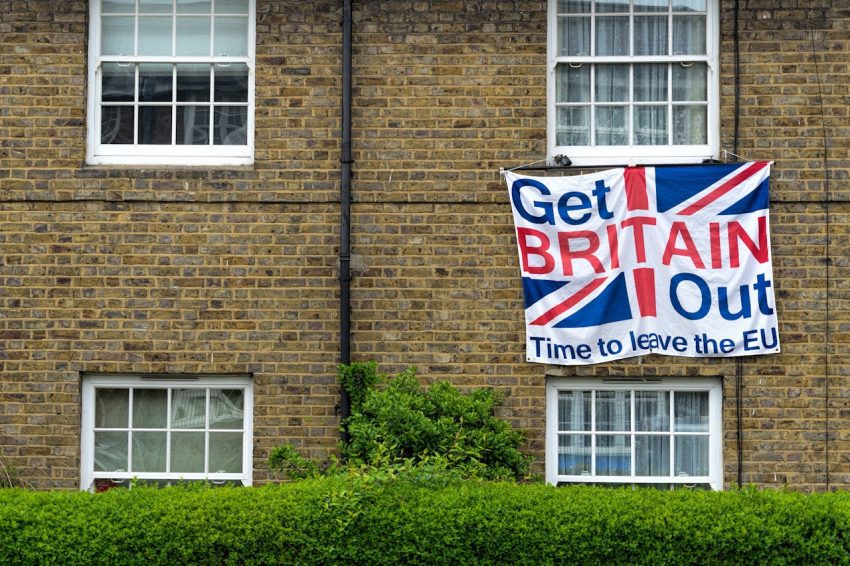
At the time of the Brexit referendum in 2016, professional economists and academics, as summarized by the IMF, predicted that Brexit would cost the UK around 4% of GDP in the long term. It turned out this was an underestimate. New research from the highly respected National Bureau of Economic Research has found that the real impact of Brexit is that the UK’s GDP is actually between 6% and 8% lower than it would otherwise have been.
For context: the UK’s GDP is currently estimated at around £3.14 trillion, meaning that without Brexit our GDP could be £188 to £251 billion higher.
In terms of tax revenues alone, this new analysis, combined with research from the House of Commons Library, shows that we are £90 billion poorer each year. This means that we, ordinary Britons, are between £2,700 and £3,700 poorer per capita in GDP than before. This high‑quality research was carried out by university academics and bankers from Deutsche Bundesbank and the Bank of England. If you have doubts, read the research — and if you’re still not convinced, just look around and ask yourself if you can find one single thing that Brexit has improved for you.
But what about the main parties in Westminster?
Finance Minister of the governing Labour Party, Rachel Reeves, stated: “There is no doubt that the impact of Brexit is serious and long-term.” Health Secretary Wes Streeting added: “I’m glad that Brexit is now the problem whose name we dare to speak.” Hardly a battle cry for rejoining the EU, yet it marks a significant shift in Labour’s approach. Under Keir Starmer’s leadership, the party is quietly but visibly taking steps toward renewed closeness with the EU. For example, in mid-December it was announced that the Erasmus programme would once again be open to British students after more than five years. This move not only has a practical impact on young people, giving them access to international experience and scholarships, but also represents a symbolic gesture of restoring relations between the United Kingdom and the European Union after the period of isolation caused by Brexit.
Reform UK Ltd are the “Brexit party,” led by Nigel Farage, “Mr. Brexit,” who is largely responsible for the decades‑long campaign to leave the EU. For them to even consider bringing the UK closer to Europe would be a huge disaster and an admission that their Brexit experiment was a complete failure for the country — which it truly is. Clearly, they will fight tooth and nail to prevent the UK from moving closer to Europe in any way.
The Conservatives enabled Brexit and, under Boris Johnson, made it the hardest possible Brexit. The official policy of the Conservative Party under Kemi Badenoch is to put Britain’s national interests first and strengthen our sovereignty, so as to: “Reject Labour’s Brexit capitulation, which would turn Britain back into a state subject to Brussels’ rules.” So they are not about to let a potential £90 billion in revenue stand in the way of their dogma.
For the Liberal Democrats, rejoining the EU is not a problem; in fact, it is their current official policy. Lib Dem leader Ed Davey said of Brexit: “The most unserious campaign in our history claimed it would save us £350 million a week, but Brexit actually cost us £250 million a day in 2025.”
Meanwhile, the Green Party has already pledged to return to the EU Customs Union and to rejoin the EU “…as soon as the political will is present.” So if anything, they are even more committed to Europe than the Liberal Democrats.
Public opinion also continues to shift against Brexit, and now 60% of people support UK membership in the EU. Combined with the potential £90 billion annual benefit to the economy, it will be very difficult for Labour — or any party at all — to resist the growing pressure to move closer to Europe.
At the start of the new year, Prime Minister Starmer declared that the United Kingdom should once again move closer to the EU’s single market. He has already concluded a Strategic Defence and Trade Agreement, re-engaged with the European Council, and hosted European leaders at the first post‑Brexit summit.
His aim is to continue gradually aligning regulations, rebuilding institutional ties, and working on the integration of trade and energy. In other words, after five years the United Kingdom is triumphantly rediscovering the benefits it used to enjoy as an EU member. Every foolish decision comes with a price. The one called Brexit has so far cost hundreds of billions of pounds.
This article is based on analysis published by Central Bylines.