


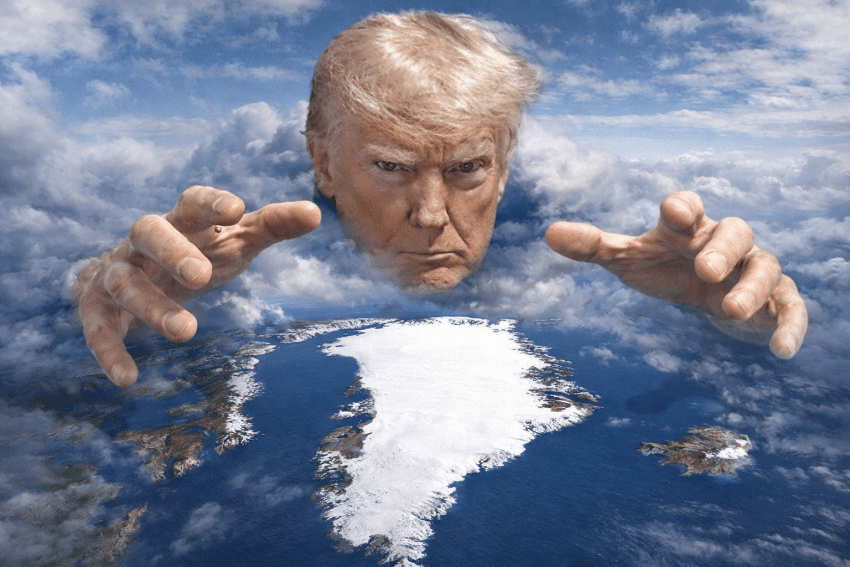
The world, and Europe in particular, watches in horror as Trump dismantles and violates rules and international treaties that have been built over decades. His latest move is an undisguised intention to annex Greenland to the United States at any cost. What is the real reason behind Trump’s obsession with acquiring Greenland?
Security
Trump justifies the need to control Greenland by claiming it is necessary to protect U.S. territory from China and Russia. He asserts that Chinese and Russian warships are roaming around Greenland—which is, of course, not true—and says he wants to put an end to it. He adds that if the United States does not acquire Greenland, Russia or China will, bringing their military arsenal closer to U.S. territory. Even hypothetically, if one of these countries attempted to militarily occupy Greenland, it would mean open war with NATO (Greenland, as an autonomous territory of Denmark, is a NATO member). Moreover, the United States already has a military base in Greenland, and both the Greenlandic and Danish governments have expressed openness to discussing the possibility of expanding the American military presence on the world’s largest island. The argument about U.S. security does not hold up at all.
Natural resources
With global warming, glaciers are melting rapidly. In Greenland, this process has accelerated dramatically over the past twenty years. Research based on satellite data and historical aerial photographs shows that Greenland’s glaciers have entered a new phase of rapid retreat and mass loss. Researchers from the University of Copenhagen, for example, found that the rate of melting of Greenland’s glaciers has increased fivefold over the last 20 years. This exposes the ground beneath, which contains rich deposits of mineral resources. Greenland is one of the richest regions in the world in terms of mineral raw materials. Geologically, it is highly diverse and contains a wide range of metallic and non‑metallic resources that are strategically important today. Greenland has some of the world’s largest deposits of rare earth elements outside China. These include 25 of the 34 critical raw materials defined by the EU. Rare earth elements are indispensable in modern technologies—from electronics and medicine to the defense industry. They include, for example, neodymium, praseodymium, dysprosium, europium, terbium, yttrium, and many others. The United States imports roughly 80% of these materials from China. If Trump were to gain control of these deposits, the United States would free itself from dependence on China. So Greenland’s mineral wealth is a more understandable motive, but even in this case both the Greenlandic and Danish governments have shown willingness to discuss the possibility and conditions of extraction by American companies.
Psychological background
A few days ago, Trump gave a more than three‑hour interview in the Oval Office to The New York Times. During the conversation, he mentioned one key point. He told the journalists that he “psychologically needs to own things.” Trump’s niece Mary Trump, who is also a clinical psychologist, describes his behavior using professional concepts in her book Too Much and Never Enough. And although she does not make a formal diagnosis, her description is very detailed. Mary Trump argues that Donald Trump displays pronounced traits associated with narcissism, characterized by a need for admiration, an inability to accept criticism, exaggerated self‑confidence, and manipulative behavior. She also describes antisocial and aggressive behavioral patterns (for example, the humiliating meeting with Zelensky in the White House), which result in a lack of empathy, using people for personal gain, impulsivity, and a tendency to break rules. This is followed by a dependence on admiration and validation. Mary Trump also explains that his behavior is driven by deep insecurity and a constant need to be praised. This is closely linked to his need to protect himself from feelings of failure, which manifests in denying reality, shifting blame onto others (most often Biden or Obama), and creating grandiose fantasies about his own perfection (such as elaborate plans regarding Gaza, calling himself a genius, or making unfounded claims about having the greatest voter support in history).
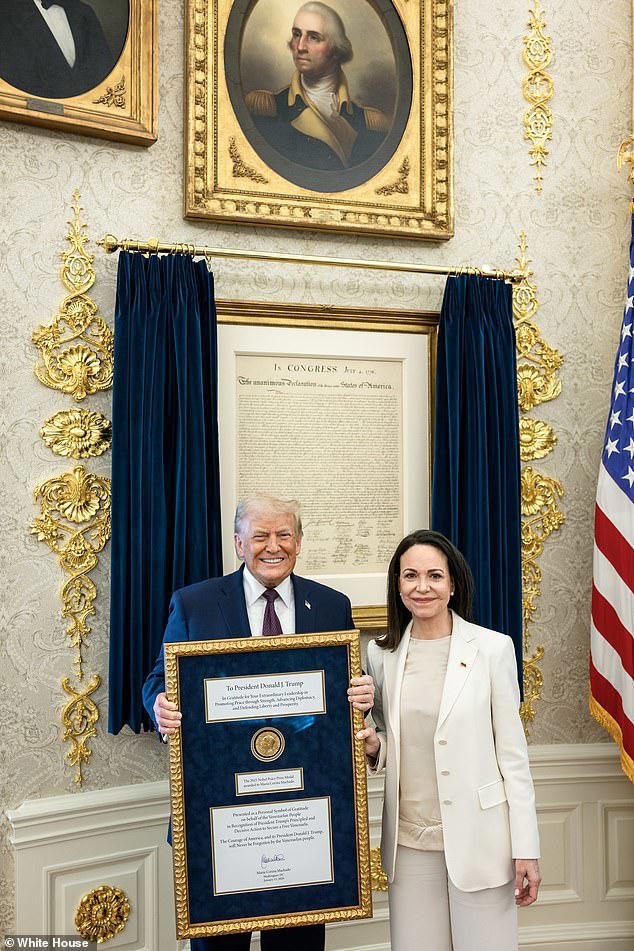
In an interview with Joanna Coles for The Daily Beast, Mary Trump analyzes the roots of this behavior. The cause lies in Trump’s childhood and the family he grew up in—one she knew very well. His upbringing lacked parental love. Trump’s father showed no interest in the children, which became especially evident when Donald was two and a half years old and his mother became seriously ill and unable to care for them. For children at that age, one of the most dynamic periods of emotional and psychological development, this had profound consequences. It laid the foundation for his future behavior. Another factor was the way he was raised. Trump’s father taught his children to succeed at any cost, regardless of the consequences for others. Mary Trump describes him as a sociopath who saw other people only as servants to his needs. All of this shaped Donald Trump’s personality. Here we can find the reasons why he put his name on a skyscraper in New York City, why he added it to the name of the Kennedy Center, why he puts it on lines of gold sneakers or watches, why he insisted so strongly on appearing, even briefly, in the film Home Alone, and why he now so desperately longs for a Nobel Prize.
It is neither the security of the United States nor Greenland’s mineral wealth that drives his intense interest in acquiring Greenland.
Above all, it is the need to fill an unfillable black hole within himself.