



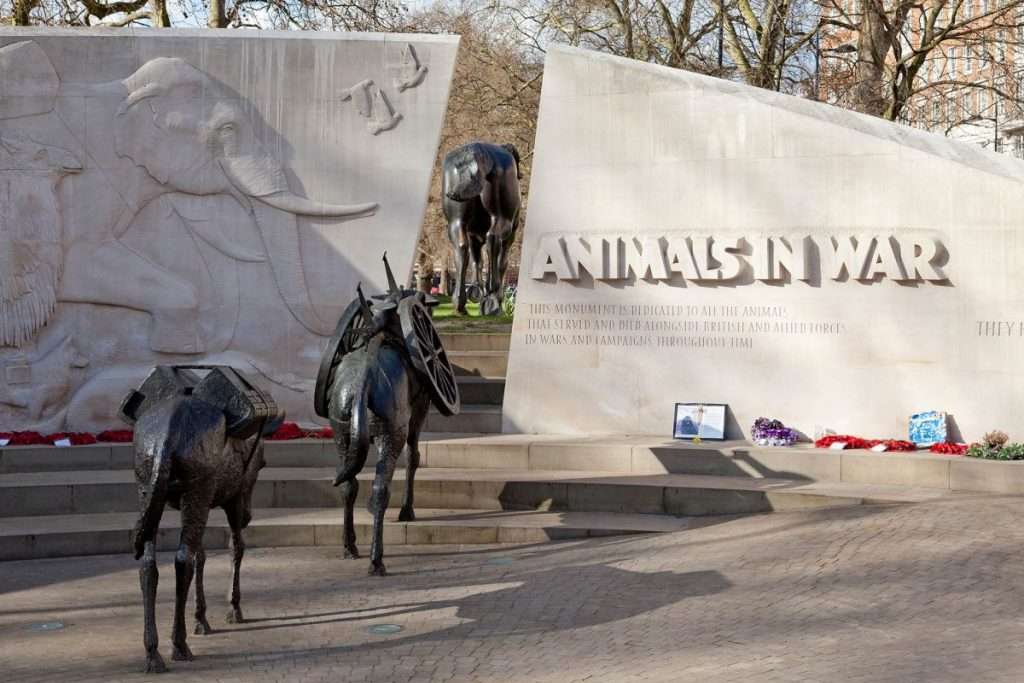
The suffering of animals in war is a topic usually reduced to horses, dogs, and pigeons. To those “noble” creatures that humans managed to tame and then deploy in their conflicts with such elegance that, years later, they even build them monuments. In London, on Park Lane next to Hyde Park, there really is a monument dedicated to the animals that gave their lives in the service of the British army. It is beautiful, touching, and certainly deserved. Yet at the same time, it is a reminder of how selective human empathy can be.
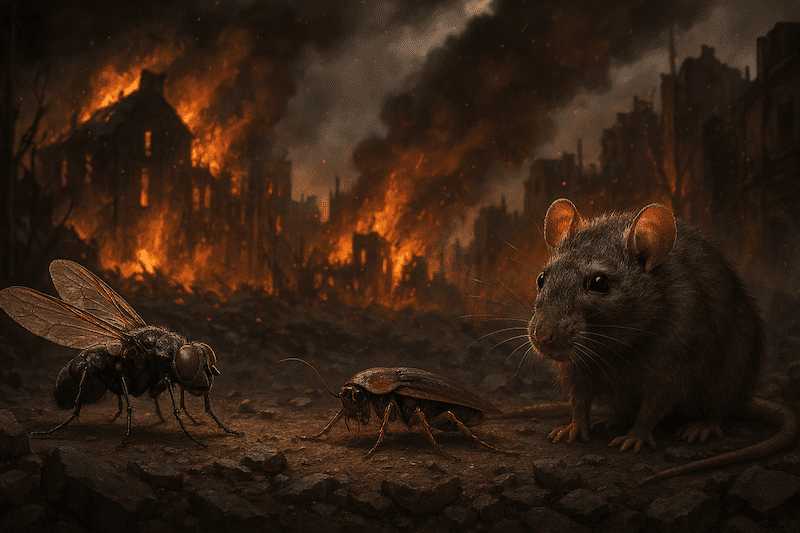
Wars are also about the billions of living creatures who, through no action of their own, find themselves in the middle of explosions, gunfire, and chaos, with no understanding of why their world has suddenly turned into a blazing apocalypse. While horses or donkeys are honored with statues, what about earthworms? Do they not die in armed conflicts as well? Simply because they cannot be tamed and therefore never joined the blood-soaked madness, they are left without a trace of recognition. And who remembers the poor flies that, after a single explosion, spend the rest of their short lives struggling with something akin to post‑traumatic stress disorder? No one offers them a helpline. Not even the dog on the London memorial, proudly gazing into the distance with a medal for bravery hanging from its collar, would bother to bark in their direction.
And what about the mosquitoes who are only trying to do what they exist to do—yet instead of sucking blood, they suddenly find themselves in a zone where nothing remains alive for that blood to circulate in? They quietly die in the dust of the battlefield from malnutrition. Or the rats, the unofficial chroniclers of every war. No one appreciates them, no one helps them with their sleep disorders.
Meanwhile humans—the most repulsive of all earthly vermin, the architects of all this—love to publicly complain about war discomfort. Like tourists in Dubai resorts. Yes, it’s terrible when you have to hide from rockets in underground car parks without air conditioning, where no mojito is served during the endless wait for rescue, and where there isn’t even one bar of mobile signal.
But what are the Dubai cockroaches supposed to say? How is any of this their fault? It wasn’t their species that caused this hell. And they have no hope of escape. No one offers them help. No repatriation flights, no evacuation corridors. Just concrete, sand, and the endless rumble of bombardment vibrating constantly through their antennae. And worse—they are raising their young in such horror. What will those tiny, adorable creatures grow into? Very likely an entire generation of unstable ADHD neurotics.
No one cares. No one says: “Cockroaches in Dubai have it tough.” No one organizes a fundraiser for them. Where is Bob Geldof with a “Roach Aid” concert when he could actually be useful? Playing them a Beatles record at Wembley would be enough.
War affects all living beings, not just those that fit neatly into a human story. We don’t need to build them monuments. Maybe it would be enough to stop pretending that the world only has value when we see ourselves in it.