



London is a vast metropolis which, thanks to its unique urban layout — lacking a clear center, rich in greenery, and sprawling in size (it’s 15 times larger than Paris) — offers a welcoming refuge for many animal species.
Beyond the usual urban fauna like pigeons, squirrels, hedgehogs, or rats, you’ll find species here that you wouldn’t encounter in other cities.
Night Hunters and Daytime Neighbours
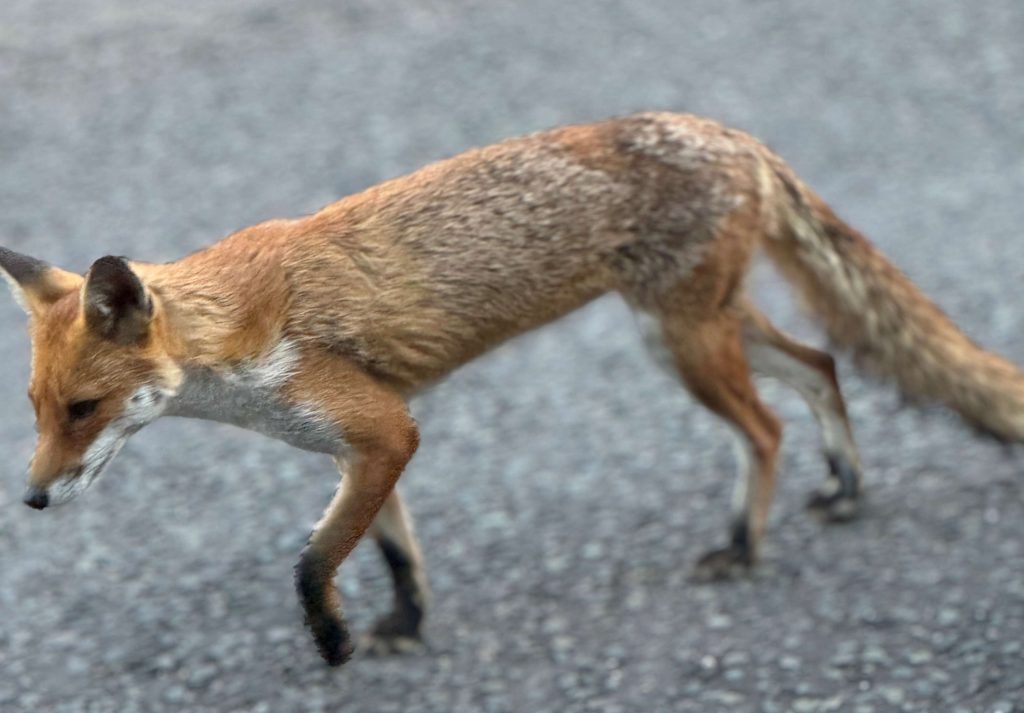
Perhaps the most iconic of them are foxes — the so-called “urban foxes.” London’s gardens, parks, railway embankments, and abandoned buildings provide ideal dens. Foxes often sleep beneath garden sheds, terraces, or in dense shrubs. Around 10,000 to 15,000 foxes live in London, and in some areas, their density reaches up to 18 individuals per square kilometre.
Before I moved to London, I had only seen a fox once in my life (outside of a zoo). Here, I encounter one, two, sometimes even three on my daily walk to work. You’ll spot them darting across streets in residential neighbourhoods or weaving between cars on wide boulevards in the very heart of the city. For foxes, the city is a buffet — rubbish, food scraps, compost, pet food left outside, and small rodents make up their diet. If you see torn plastic bags with scattered waste all around, it’s probably not the work of drunken partygoers returning home at dawn, but foxes.
Another of their peculiarities is the eerie sound they make during mating season (December–February). It’s indescribable — it sounds like something out of a horror film and is incredibly loud. They coexist with pets without major issues. Conflicts with cats are rare, though foxes do steal food left out in garden bowls. The same goes for larger dogs, which foxes tend to avoid. Problems may arise with smaller breeds, especially if they’re guarding pups.
Foxes are wary of humans and usually cross the street when they spot you. Still, I’ve managed to get within two metres of one. It’s fair to say that people, pets, and foxes live here in mutual symbiosis. Urban foxes, however, live much shorter lives than their woodland counterparts — their lives often end under the wheels of cars. If you want to observe them, it’s best to get up early and head out before dawn. You’re almost guaranteed to spot one.
From India to Hyde Park
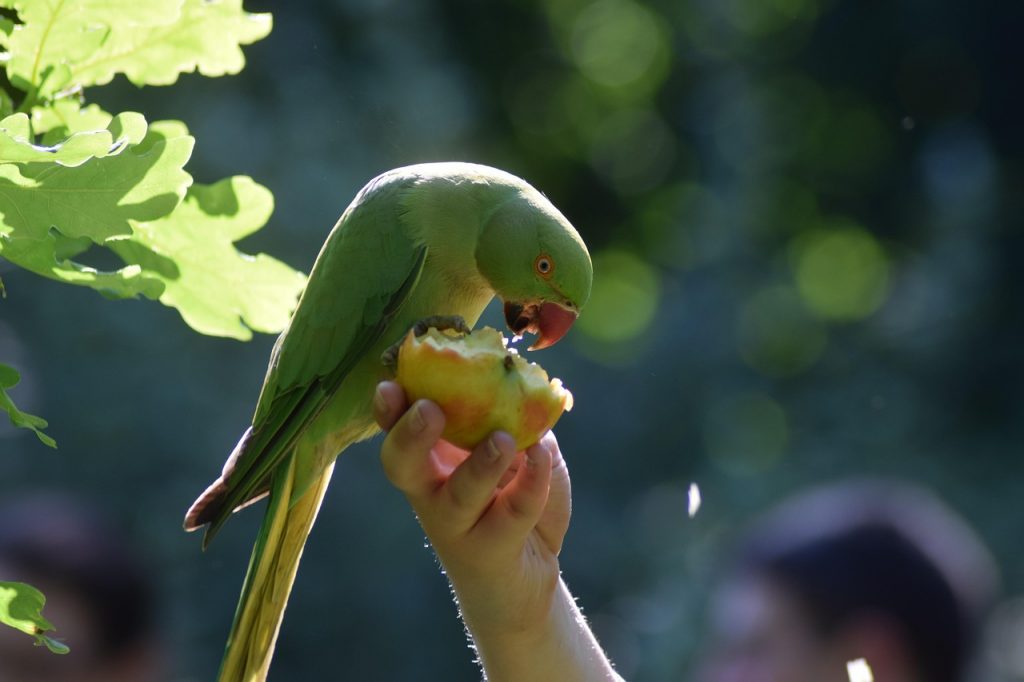
Another distinctive species, found mainly in London’s parks, are wild parrots. Specifically, the ring-necked parakeet (Psittacula krameri), originally native to India and Africa. Today, up to 50,000 of them live in London, and their origin is shrouded in myth. One story claims that Jimi Hendrix released the first pair in the 1960s on Carnaby Street. Another legend says several escaped during the filming of The African Queen in 1951, starring Humphrey Bogart and Katharine Hepburn.
A more plausible theory suggests they gradually escaped from domestic aviaries and were released due to fears of psittacosis (parrot fever) in the 1950s. They thrive in London thanks to its mild climate, abundant food, plentiful nesting trees, and low predator numbers. Their impact on the ecosystem is still being monitored, and they haven’t yet been declared invasive — although they often occupy nesting sites of native species and compete with them for food.
If you visit Hyde Park and look up into the treetops, you’ll likely spot them — or at least hear their loud calls. If you bring sunflower seeds, you might lure them in, and they’ll swarm you, eating straight from your hand. Sometimes squirrels join in, climbing up your clothes and feasting alongside the parrots from your palm.
Waters Full of Life
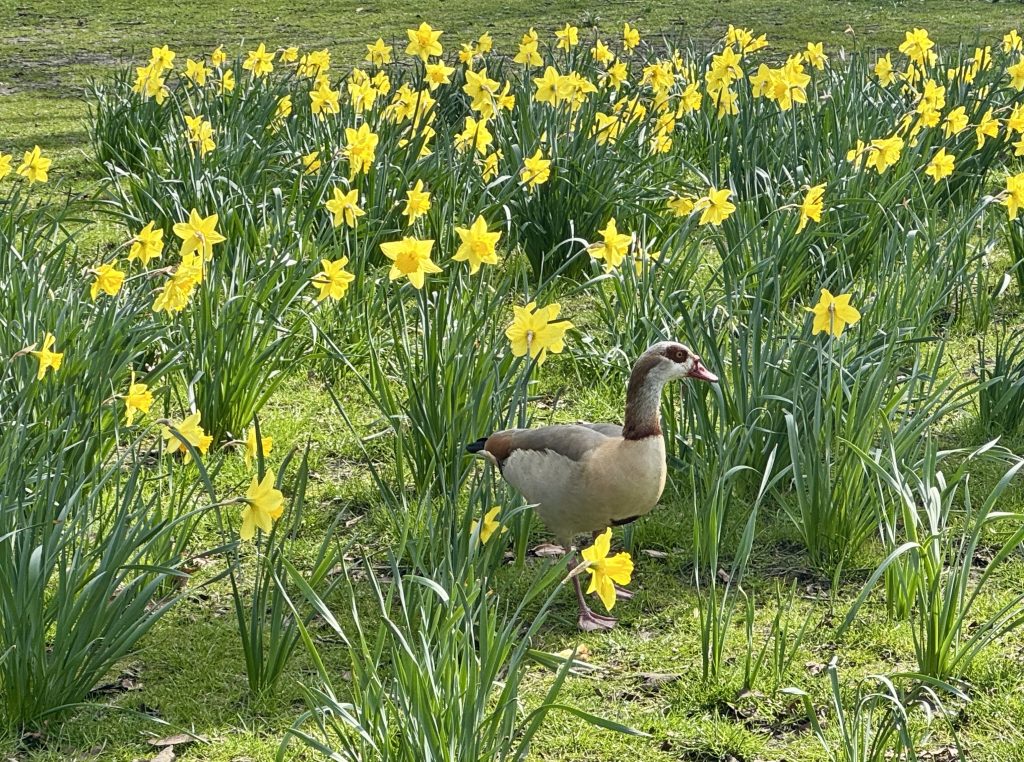
London’s parks — often featuring large bodies of water like Hyde Park, Regent’s Park, or St. James’s Park — are home to many species of waterfowl. You’ll find birds such as the great crested grebe (Podiceps cristatus), grey heron (Ardea cinerea), Eurasian coot (Fulica atra), mallard (Anas platyrhynchos), and more exotic species like the mandarin duck (Aix galericulata), Egyptian goose (Alopochen aegyptiaca), or the great white pelican (Pelecanus onocrotalus). And of course, the classic mute swans (Cygnus olor).
Incidentally, all swans on public waters across England have been the property of the monarch since the 12th century, and the royal family is actively involved in their protection. Each year, the traditional Swan Upping takes place on the Thames — a ceremonial swan census where crews in traditional red uniforms sail the river, catch swans, weigh them, measure them, and check their health. The event also has an educational dimension, with schoolchildren and the public taking part.