


Problematic Youth
It was 1987. In the Soviet Union, a political and economic reform programme called “Perestroika” had been underway for two years, aiming to liberalise the rigid socialist system in a desperate attempt to save its bare existence. The Soviets, who had previously controlled everything, suddenly stopped dictating to their satellite states and, to some extent, allowed them to make decisions on their own. That had been unthinkable until then. After forty years of Soviet-style top-down governance, Czechoslovak communists were incapable of independent decision-making, and reforms in thinking and leadership came very slowly—often even more slowly than in the USSR itself.
At the time, I was in my second year of grammar school, and one day our class went on a school trip to an exhibition titled “Problematic Youth Groups.” Our teachers wanted to show us, as a warning, examples of behaviour that didn’t align with socialist morality. In the display cases were denim jackets with heavy metal patches, leather jackets with pyramid studs, brass knuckles, knives, and even a small model tank that fired low-calibre bullets (probably some problematic model-maker). And there was also a Sex Pistols badge—four guys with a British flag in the background. I was instantly mesmerised. I loved the name and the graphic design.
My classmate Víťa, who listened to black metal, told me they were punks and that he had them recorded at home. The next day, he brought me a cassette of Nevermind the Bollocks, Here’s the Sex Pistols. That music hit me immediately. The corduroy trousers my mum bought me at Prior shopping mall went straight to the bottom of my wardrobe, and I ripped up a pair of old jeans instead. I swapped my proper jacket for an old, smelly, scuffed pigskin one I bought from another classmate for 50 crowns. I proudly became a member of the problematic youth.
Celebrated Youth
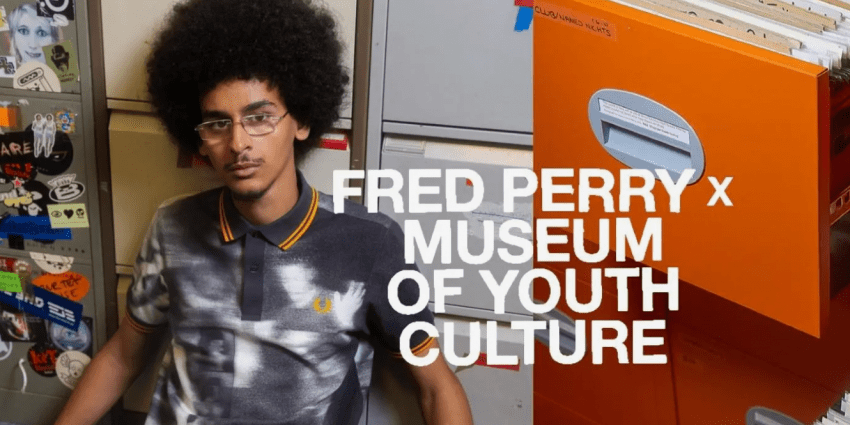
Now it’s 2025. The world has changed a lot since then. Socialism couldn’t be saved, I’m steadily approaching senior age—and I’m still problematic. In London’s Camden Town, the Museum of Youth Culture is set to open this December—a global first. The complete opposite of that idiotic propaganda exhibition we were forced to attend 38 years ago.
This museum won’t be a traditional institution with display cases and artefacts, but a living archive, a community platform, and a cultural laboratory. It documents, celebrates, and analyses youth culture from the 1920s to the present day: from teddy boys, mods, skinheads, punks, ravers, emos, goths, all the way to K-pop, TikTok, and queer zines. Its aim is to show how young people have shaped society, fashion, music, protest, identity, and creativity. It will feature photographs, fanzines, personal stories, interviews, posters, clothing, and other materials from people across Britain and the world and anyone can contribute. Instead of elite curators, it collects stories directly from the public. Everyone can share a memory, a photo, or an experience.
If you’re visiting Camden, this is something you absolutely shouldn’t miss.
Thanks for this initiative go to its founders and patrons: The National Lottery Heritage Fund, Fred Perry, and City Bridge Foundation.