


The closure of the Strait of Hormuz is crushing the global economy. But at the same time, it’s exactly the slap-in-the-face wake‑up call the world needed. Every country is now showing whether it’s capable of strategic thinking, or whether it’s just waiting for someone else to solve its problems.
Slovakia and Hungary did practically nothing after Russia’s invasion of Ukraine. No diversification, no courage — just a comfortable reliance on cheap Russian oil, which the Russians used to buy influence. And now, with the Druzhba pipeline damaged, they suddenly whine as if everyone has betrayed them. They haven’t. It’s simply become clear that their energy policy was short‑sighted and fundamentally misguided.
The Czech Republic, fortunately, understood in time that relying on the Kremlin is suicide. It shifted to other suppliers and is now in a much better position. But the real winners are those who started acting long before Russian aggression.
Germany, Norway, Spain, France, the United Kingdom. Countries that understood that the future doesn’t lie in oil, but in renewable energy. Britain today imports virtually no oil or gas from the Persian Gulf. It extracts its own gas from the North Sea and buys the rest from Norway. In oil, it is 40% self‑sufficient and imports the remainder from the US, Libya and Nigeria.
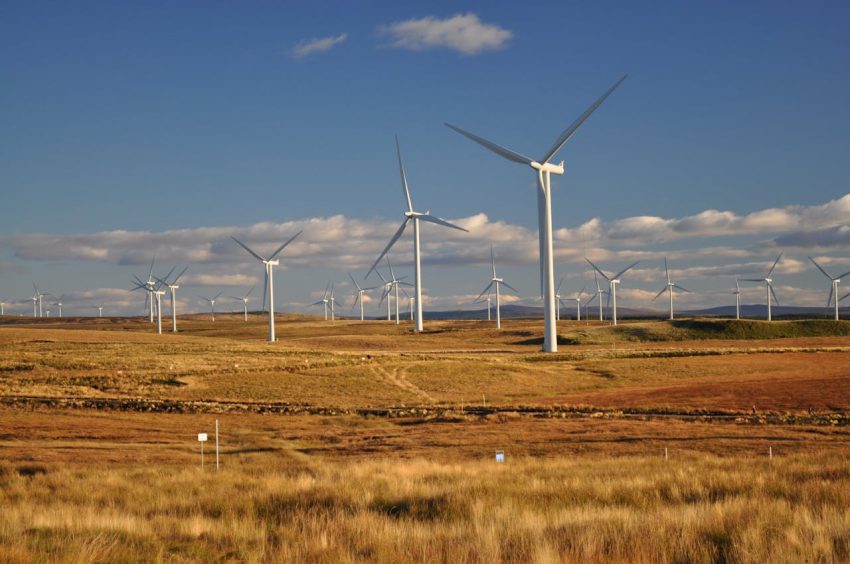
Yesterday I watched Prime Minister Starmer in Parliament. He didn’t look like a tired technocrat. He looked like someone who understands that time is running out. He called for an even faster pace of building renewable energy. And he’s right. In Britain today, renewables make up over 60% of the energy mix. In the Czech Republic, it’s under 20%. That difference is no accident. It’s largely the result of political courage and, above all, a clear long‑term strategy, regardless of who happens to be in government.
And what about electric cars? In Britain, BEVs already make up roughly 60% of all newly registered company cars. In total registrations, they account for 25% of all vehicles, and the share grows every month. The target for 2030 is 80% of all new cars being electric — a goal that, before the crisis in the Persian Gulf, seemed almost too ambitious. Today I see it differently. In the Czech Republic, the share is growing relatively quickly, but still only reaches 5–7%. Škoda Auto CEO Klaus Zellmer recently said in an interview that people don’t want electric cars. In the Czech Republic — Škoda’s home turf — the Enyaq placed only third, behind Tesla models, with a total of 1,641 cars sold (source: Cebia – official registrations for 2024).
In the UK, Škoda placed seventh and ninth in the TOP 10 best‑selling electric cars with its Elroq and Enyaq models, with a combined total of around 25,000 vehicles sold (source: SMMT – official registrations for 2025). Meanwhile, the Volkswagen Group has by far the strongest representation in the TOP 10 with four models. From the comparison, it seems that it is specifically Czech consumers who are still reluctant to buy electric cars — and when they do, they don’t prefer Škoda.
The difference starts with government attitudes. While in Britain the rapid electrification of transport was supported by the Conservative government under Boris Johnson — and the Labour government under Keir Starmer continues in the same direction — the situation in the Czech Republic is the opposite. The government of Petr Fiala took a neutral to sceptical stance, and the current government of Andrej Babiš is a vocal opponent. And this, in my view, is the main reason why the Czech Republic lags behind Britain in transport electrification by roughly a decade.
It’s hard to persuade customers to buy electric cars when government officials constantly express scepticism. The shock is then all the greater in moments like the current crisis in the Persian Gulf. Babiš’s public outrage over fuel prices — blaming petrol station owners — comes across as bitter irony.
The world is changing. Fast. And the countries that fail to understand this will end up exactly where Hungary and Slovakia are today. In the corner, without energy, without strategy, without a future.