

From Journalist to a Symbol of Radicalization
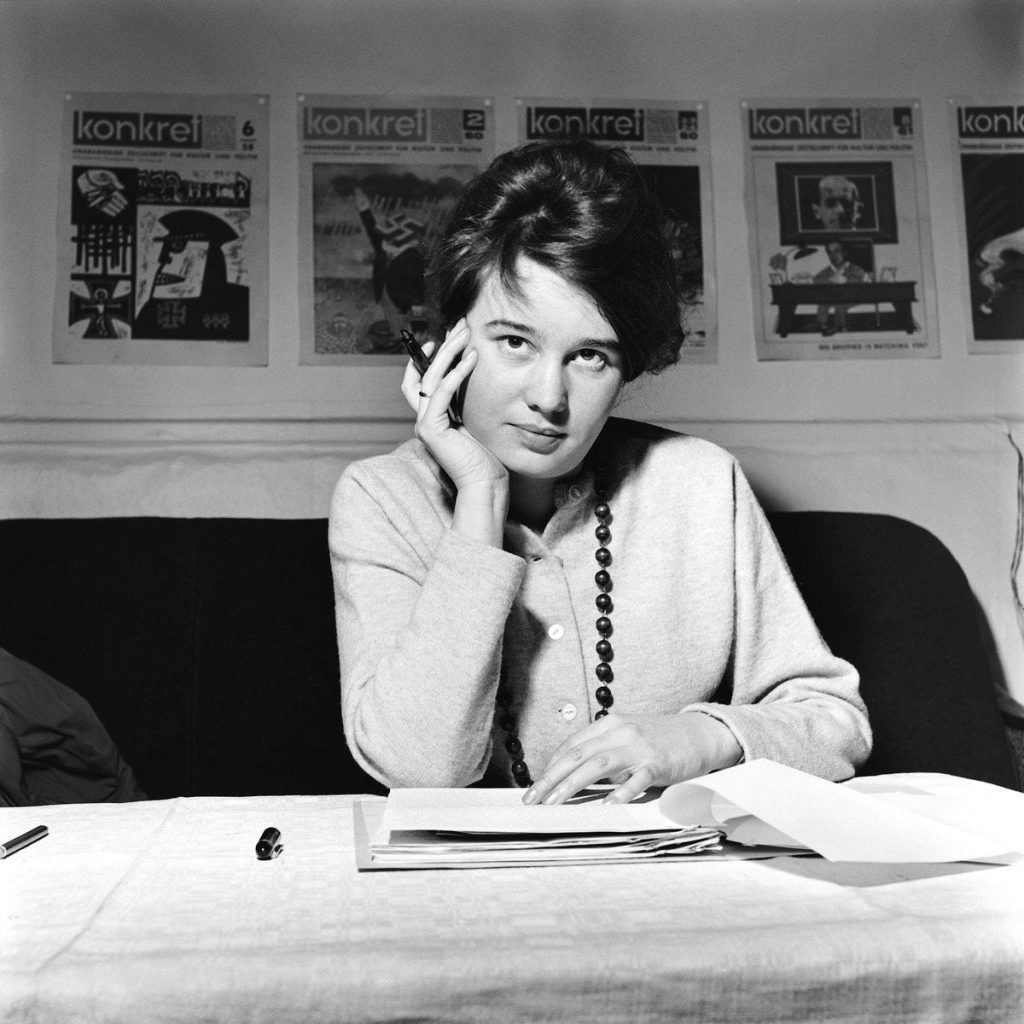
Ulrike Meinhof (1934–1976) was one of the most prominent figures of the radical left in post‑war Germany. She began as a brilliant journalist and public intellectual. She studied philosophy, sociology and German studies, and already during her university years became involved in student protests and peace initiatives. In the 1950s and 1960s she became a leading journalist for the magazine konkret, writing about social injustice, the Vietnam War, authoritarian tendencies of the West German state and the problems of the younger generation. Her texts were sharp, morally urgent and often provocative, yet still within the boundaries of democratic debate.
The turning point came at the end of the 1960s, when part of the West German left radicalized. Meinhof increasingly embraced the view that armed resistance against the state was legitimate. The decisive moment came on 14 May 1970, when she took part in the armed liberation of Andreas Baader from the Institute for Social Issues in Berlin. This action marked her final transition into illegality and her entry into the RAF.
In the following months she underwent training in a Palestinian camp and became one of the ideological architects of the group. She co‑signed the text The Concept of the Urban Guerrilla, which defined the strategy of armed struggle against the West German state.
After several years of underground activity, during which she participated in planning bomb attacks and armed actions, she was captured by police in Hanover on 15 June 1972. The arrest took place without a shoot‑out. From the first day she was held in strict isolation, which later became one of the most controversial aspects of her imprisonment.
In 1974 she was sentenced for the first time—eight years in prison for her role in Baader’s liberation in 1970. A year later the main Stammheim trial began, where she and other RAF members were charged with murders, attempted murders and bomb attacks. The trial was intensely followed and conducted under extraordinary security measures. Meinhof was held in solitary confinement for long periods, which, according to many observers, severely worsened her mental state (she repeatedly complained about conditions she described as psychological torture).
On 9 May 1976 she was found hanged in her cell in Stuttgart‑Stammheim prison. The official investigation concluded it was suicide, but the circumstances of her death raised immediate doubts. No farewell letter was found. Part of the German public still claims she was killed by the state and that the suicide was staged.
The Price of a Mistake
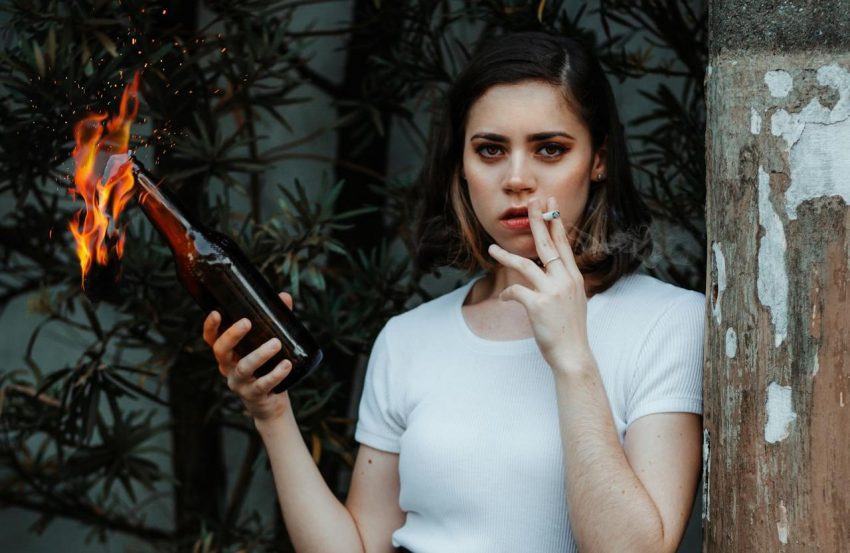
Early in the morning of 20 March, one of the halls in an industrial complex in Pardubice went up in flames. A previously unknown group calling itself Earthquake Faction claimed responsibility, stating that it attacked because of alleged ties between the company and the Israeli arms industry. Police are investigating the attack as terrorism. Several people were detained in the Czech Republic and abroad, and investigators believe it was a coordinated action by a small, radicalized group. There are also clear parallels with similar attacks carried out by the Palestine Action movement in the United Kingdom.
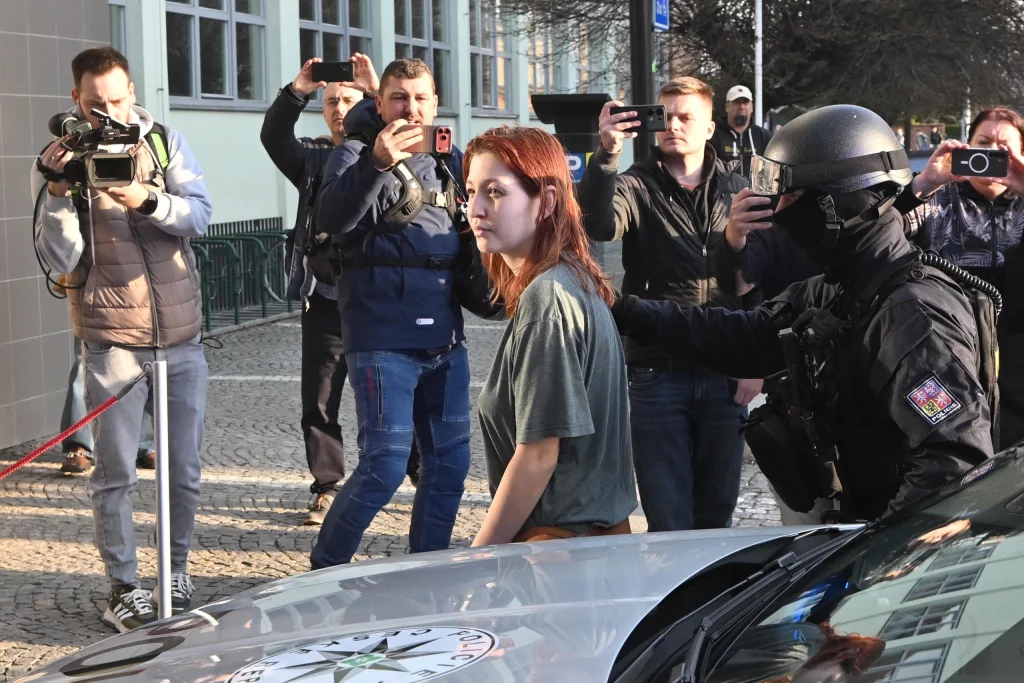
Within a few days the police arrested the first suspects. Among them was a young university student, Anežka Brahová. The detainees were taken into custody and charged with terrorism.
While Meinhof was 37 at the time of her arrest, Anežka Brahová is just over twenty. And just as Meinhof had once been an excellent journalist, Brahová, still a grammar‑school student, won first place in a historical‑literary competition organized by the University of West Bohemia in Plzeň. She won with an essay titled I Wanted to Be Like…. In the winning text she wrote, among other things:
“If you try not to hurt anyone knowingly, you are my role model. If you are not afraid to stand up for what you believe is right, you are my role model. If you refuse to adopt opinions unthinkingly as your own, you are my role model. If you do not put comfort before justice, you are my role model. If you do not place yourself above others, tolerate beliefs and do not forbid love to anyone without distinction, if you do things for good reasons, you are my role model.”
It is a striking manifesto of values, revealing a person who builds her identity on ethics, courage and humanity. A person who wants to act according to conscience.
According to available information, Brahová also long supported Ukraine, attacked by Russia. All the more tragic, then, is the fact that the very company the group attempted to destroy did not produce drones for Israel, as the attackers believed, but for Ukraine—the country Brahová publicly sought to support. This is perhaps the most painful dimension of the entire case.
She and her co‑defendants now face 12 to 20 years in prison, or even an exceptional sentence if the court deems the attack extraordinarily serious. One wrong step, one tragic mistake, and a life can break in a way from which there is no return.
What future awaits the Czech Ulrike Meinhof?